
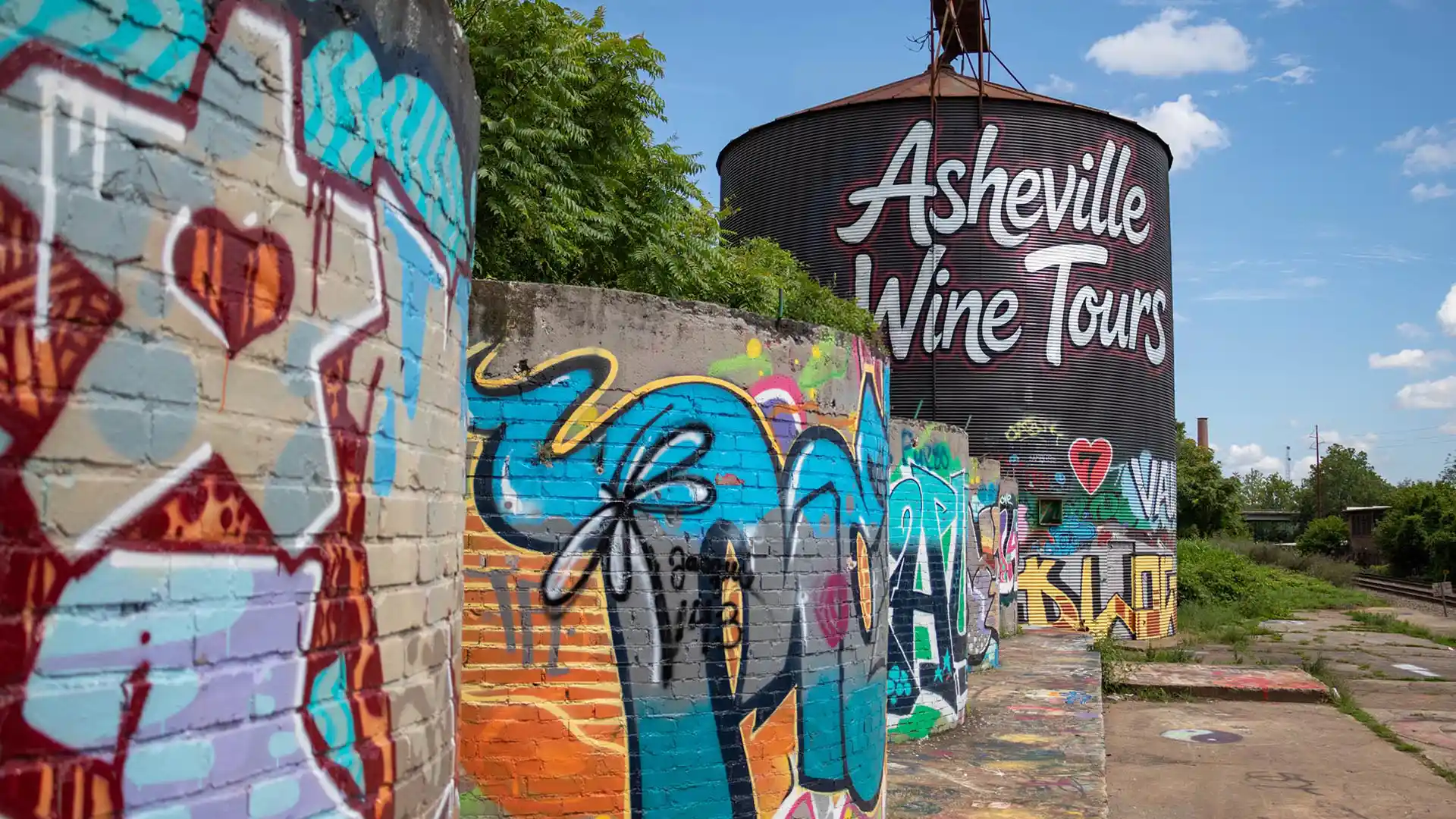
There are so many reasons to visit Asheville North Carolina that, quite frankly, can all stand on their own as valid and perfectly legit reasons for visiting the portal to all of Western North Carolina. What many people don’t realize is that wine is not only another valid and perfectly legit reason for visiting Asheville, it is actually a great reason for visiting Asheville. Not only are there numerous wine shops and tasting rooms in downtown Asheville but there are actual world-class wineries making North Carolina wines that are only 35-50 minutes outside the city. Many of the wineries are located within federally recognized American Viticultural Areas (AVAs); specifically the Crest of the Blue Ridge Henderson County and the newly recognized Tryon Foothills. The wine scene in Asheville is a lot bigger and more established than what most people realize! So whether you are an experienced wine collector or just a casual drinker, let this scholar of wine give you what I feel to be is the Ultimate Guide to Wineries Near Asheville, NC.
First, an Introduction and a Few Definitions…
Before we start diving into wineries in and around Asheville and what makes them unique, please give me a few lines to introduce myself and provide a few definitions so that you understand why certain things are important. First off, I am Ryan Watts, your humble author of this article who will try my best to provide you with honest, fair, accurate, and good information about the Asheville wine scene. I am a certified wine expert with credentials from both the Wine & Spirit Education Trust (WSET) and the US Court of Master Sommeliers (CMS). Each of these organizations have four levels of certification and I have currently achieved level 3 with WSET and Level 1 with CMS. I am currently enrolled in the level 4 program at WSET and am about half way through the six incredibly difficult tests you must pass to achieve level 4. Once I complete that, I plan to continue with CMS and see how far I can go there. With both WSET and CMS, it is a long and very difficult process but wine is a passion for me so I enjoy the challenge. While I am technically “certified” and *should* know a lot about wine, the courses are very humbling and I have slowly realized how little I actually know about wine. The world of wine is massive but extremely fascinating so my plan is to be a student of wine for as long as I can. I am also the founder of Van in Black and hope to use my knowledge of wine and my relationship with others in this region to provide the best possible experiences for people visiting the area. But enough about me…
You might be wondering what an AVA is and why it is a big deal for this region. An AVA, or an American Viticultural Area, is a federally recognized area that is a delimited grape growing region with specific climatic and/or geographic features that differentiate it from surrounding regions. These features will have an affect on how the grapes are grown and ultimately develop into the wonderful beverage we call wine. While you may not have heard of the two AVAs near Asheville, you probably have heard of other AVAs in America. Examples of these would be places like Sonoma County and Napa Valley California or the Willamette Valley in Oregon. There are quite a few AVAs in America and, believe it or not, all will create wines that have unique characteristics for their region. A skilled Sommelier would be able to recognize these characteristics to identify wines from specific regions. For the Asheville area, having two AVAs in the area is a big deal. It is also interesting to note that although these AVAs are technically right next to each other, the geology and climate are very different. Because of this, the wines are also very different…More on this later!
So as we dive into the “Ultimate Guide“, my hope is that the two paragraphs above help to put things into perspective as you delve into this article.
Understanding the Asheville Wine Country
As I mentioned in the opening paragraph of this article, Asheville has a good wine scene inside the city itself. There are numerous wine bars and tasting rooms but there are actually a few locally made labels that have locations in the heart of the city. The Biltmore Estate, which produces their own wines, is also technically inside the city of Asheville but it is somewhat of a destination unto itself. Beyond that you have wineries in the open countryside with beautiful vineyards located to the Northwest, South, and East of the city that are worthy of a good private Asheville wine tour experience. There is also a tasting room to the West that makes their own wine. All-in-all, there are about 22 locations that are all within about an hour of Asheville where you can sample and enjoy North Carolina grown and produced wines. For the content of this list, I am focusing on wine producers that make wine from grapes. While technically all cider is wine (but not all wine is cider), I am not including ciders in this list. Not to downplay the importantance or significance of cider, it is actually quite good and very well established, but I need to keep this article to less than 10,000 words and then I can, should, and probably will do an ultimate list for ciders too. If cider is your thing, check out my article from 2023 titled Asheville Cider Tours for an intro into this topic.
So here we go exploring the folks in and around Asheville that produce wine from grapes…
The Regions and the Wineries…
Most people will only be able to visit 1-2 wineries per day or possibly 3-4 if you hire a professional car service like Van in Black. So with 20+ options available (and growing!), you can easily see that visiting all of them will take multiple trips over several days.
Inside the City
If you don’t have the time to get outside the city and explore the full vineyard experience at any of the farms referenced below, you can check out these great spots inside the city of Asheville:
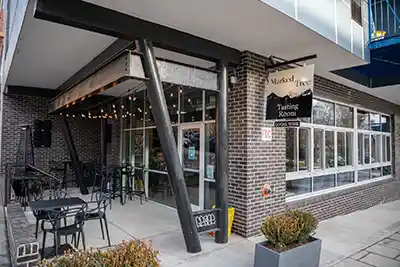
Marked Tree Asheville
Check out the full description of Marked Tree Vineyard below to learn more about them. They do, however, has a tasting room inside Asheville that is walkable from just about any downtown location. This lets you easily taste and experience North Carolina grown/produced wines without leaving the city.
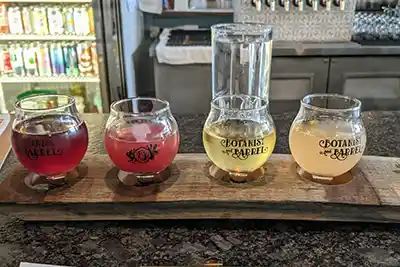
Botanist and Barrel
A local tasting room and winery that produces natural and pet-nat wines and ciders with fruit that sourced from local growers as well as their own local farms. Staying true to natural style wines, their wines are fermented using ambient yeast, unfiltered, and created using low intervention techniques. They are also located downtown and are an easy walk from most downtown locations.
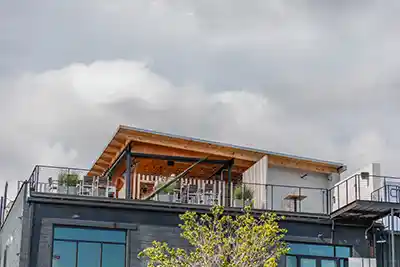
Visuals Wine
The Visuals Rooftop Bar, part of Burial Beer, has wine that they craft using juice that they import from California vineyards. They craft natural wines, ciders and aperitifs using minimum intervention techniques and native yeast fermentation. The rooftop tasting bar is a way to enjoy wine in the city.
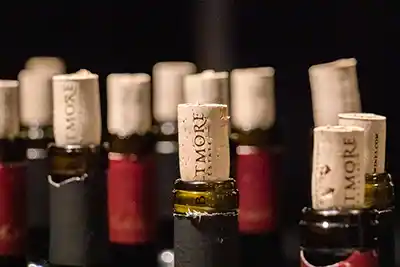
Biltmore Estate Winery
Dubbed as the most visited winery in the USA, the Biltmore Estate Winery is an experience you will not want to miss if you are visiting the estate. They feature a large offering of 20+ mostly dry wines that include whites, reds, rosé, and sparkling wines. Grapes are sourced from local vineyards, including some that they manage, as well as from other locations in the USA. If you are visiting the Biltmore Estate then a tasting at the winery is complimentary with your visit.
Northeast
Sitting to the Northeast of Asheville in the town of Leicester, about 14 miles as the crow flies, is the sole winery in this direction:
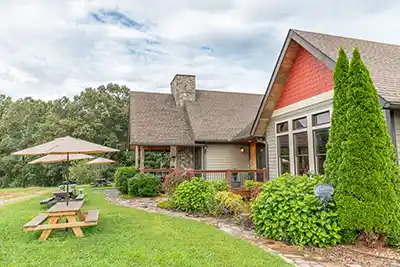
Adison Farms Vineyard
A family farm on about 55 acres with about six acres under vine. The vines sit at an elevation of about 2,300 feet with five varieties currently being cultivated that include Cabernet Sauvignon, Cabernet Franc, Sangiovese, Petit Verdot and Petit Manseng. They have a quaint tasting room at their location with beautiful views of the vines and surrounding mountains.
East
To the east of Asheville, following I40, you will find three very unique wineries starting at Old Fort and continuing to Morganton:
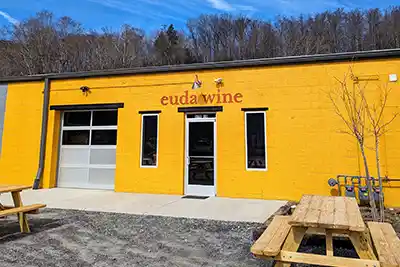
Euda Wine
Located in Old Fort and sourcing grapes from local growers, Eudu Wine is husband/wife team that specializes in low intervention wine making techniques. Since they source their grapes from various farms in the area, their offerings may change from year to year and may include some hybrid and non vitis-vinifera varietals you haven’t heard of before. They have a very inviting and relaxing tasting room where you can hang out and taste their current offerings.
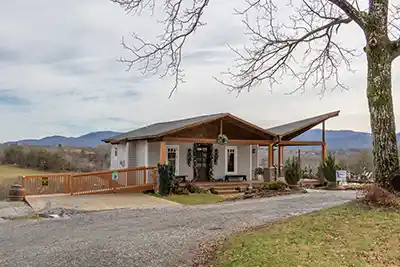
Silver Fork Winery
Located about 45 minutes outside Asheville in Morganton, Silver Fork Winery is another husband/wife team that produce dry (mostly vitis-vinifera) wines from estate grown grapes. Varietals include Cabernet Franc, Merlot, Chardonnay, Petit Verdot, and Chambourcin. Their tasting room has wonderful views of their vines and the surrounding mountains.
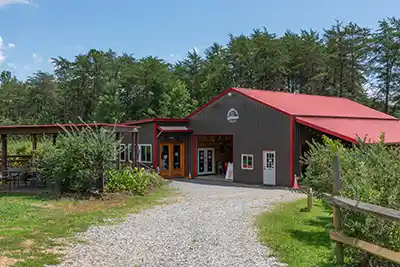
Perry’s Berry’s Vineyard & Winery
Another Morganton based winery and vineyard that produces mostly fruit wines that are dry, semi-sweet, and sweet. They also have an onsite bistro and blueberry picking opportunities during the summer months.
West
Heading west out of Asheville on I40 doesn’t provide too many options for wineries but there is one:
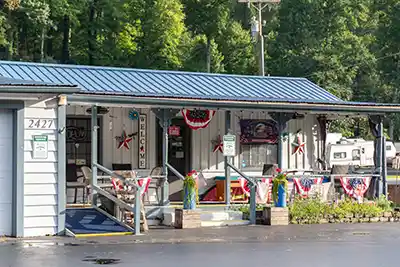
B & C Winery
Locally crafted wines using juice that they acquire from around the world. B & C Winery is a husband/wife team that is located in heart of Maggie Valley, NC. Since they acquire fruit from various sources, their offerings of wine are varied and include whites, red, and sweet wines.
South
Heading south of Asheville is where the majority of the wineries are found as this is where both local AVAs are located. The two AVAs, Crest of the Blue Ridge Henderson County and Tryon Foothills, are located almost right next to each other but offer drastically different environments for growing grapes. I wrote a detailed description of these differences on a blog I wrote in 2023 called “What Can a Mountain Teach Us About North Carolina Wines?“. It is worth checking out if you want to geek out on some very nuanced and technical details about elevation differences and the affects they have on wines. If, however, you want to quick “cliff notes” version, here it is. The vineyards in Crest of the Blue Ridge Henderson County are typically about 1,000 feet higher than the vineyards in the Tryon Foothills. While this doesn’t seem like much, it will have an affect on both temperature and the growing season for each region. These differences will cause things like the acidity and fruit development to be different. I am not saying that one is necessarily better than the other but they will be different and they will produce different tasting wines. The Tryon Foothills are also affected by the isothermal belt that primarily affects Rutherford and Polk Counties (The Tryon Foothills are located in Polk County). This typically creates milder winters and provides a longer growing season. Once again, this has an affect on the grapes that are grown in this region. Wine makers and vineyard managers will know these differences and seek to grow varietals that grow best in the conditions for their area. This is, however, a complicated and long process to fully understand. This is why wine regions, like defined AVAs, can take years or even decades to fully understand what the best varietals and growing practices are best for a given region. It really is an exciting process to watch and experience.
Here are the wineries/vineyards that are located south of Asheville:
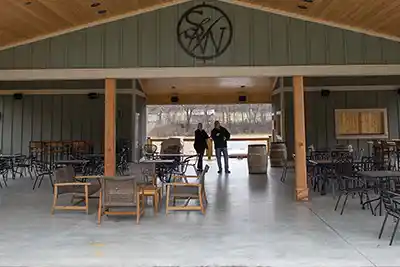
Souther Williams Vineyard – Crest of the Blue Ridge AVA
One of the newer wineries in the Hendersonville area. Souther Williams is a 35 acre family owned winery and vineyards on land that has been in their family for 200 years. With 8 acres currently under vine, Souther Williams makes wine from both estate grown grapes and grapes brought in from other regions. Varietals currently grown include Gruner Veltliner, Riesling, Vidal Blanc, Cynthiana, Blaufrankisch, Regent, Saperavi, and Cabernet Franc. All guests visiting Souther Williams must be 21+.
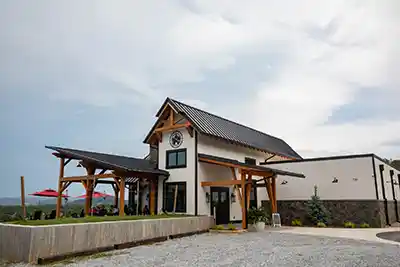
Stone Ashe Vineyard – Crest of the Blue Ridge AVA
A small boutique winery that produces wines from grapes grown on their estate. Varietals grown include Riesling, Chardonnay, Sauvignon Blanc, Cabernet Sauvignon, Cabernet Franc, Petit Verdot, and Merlot. All guests visiting Stone Ashe must be 21+.
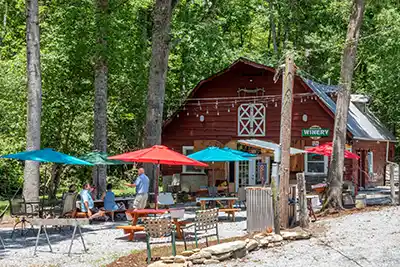
Sawyer Springs Vineyard – Crest of the Blue Ridge AVA
Another family owned and operated winery/vineyard in Hendersonville with deep roots (six generations) in the area. They produce a combination of sweet and dry wines using estate grown grapes like Cabernet Sauvignon, Merlot, Malvasia Bianca, and Zinfandel. The red barn used for their facilities and tasting room is welcoming for you to come by and sample their wines.
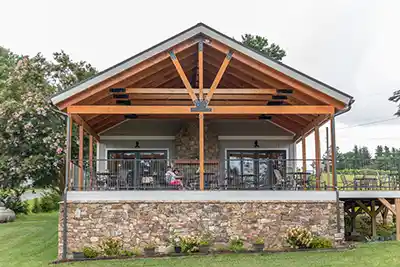
Johnson’s Legacy Vineyard – Crest of the Blue Ridge AVA
I believe this is the newest winery in the Hendersonville region. Another boutique family owned/operated farm that produces wines from their estate grown grapes. They have a small tasting room with very nice views of the surrounding farms and hills. Wines are dry vinifera style wines that are a combination of blends and single varietals using Cabernet Franc, Vidal Blanc, Traminette, and others.
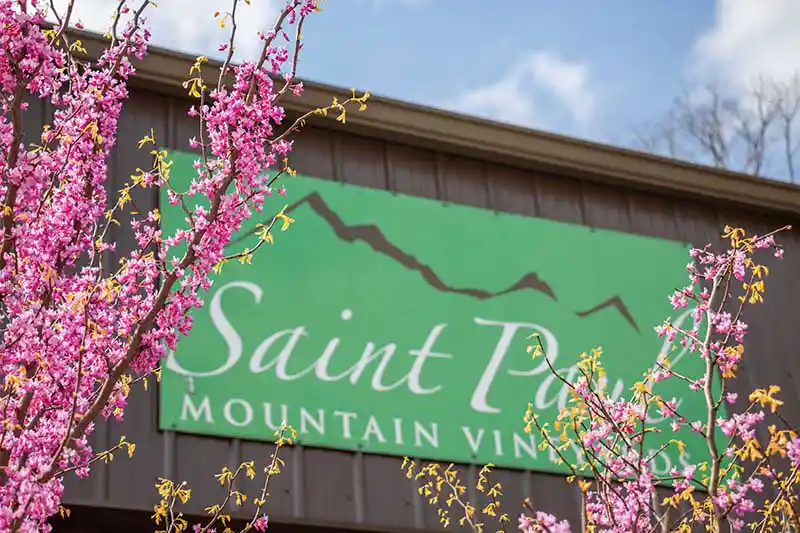
Saint Paul Mountain Vineyards – Crest of the Blue Ridge AVA
One of the original vineyards in the Hendersonville region, Saint Paul Mountain Vineyards produces wines from mainly estate grown grapes on the vineyards that surround their tasting room. Primary varieties include Vidal Blanc, Cabernet Sauvignon, Cabernet Franc, Merlot, and Malbec. They also produce ciders from locally sourced apples that surround their facilities. Their tasting room is open seven days a week and is welcome to everyone.
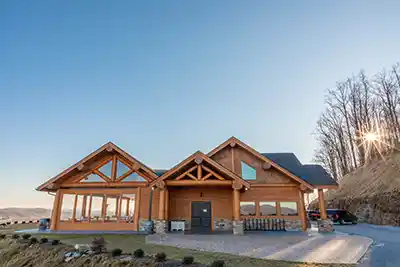
Point Lookout Vineyards – Crest of the Blue Ridge AVA
Located at the top of a mountain with stunning views of the surrounding foothills and valleys. Point Lookout produces mostly dry vinifera wines but they also produce various flavors of mead. The majority of their grapes are estate grown with the main varietals grown including Riesling, Chardonnay, Blaufrankisch and Cabernet Franc.
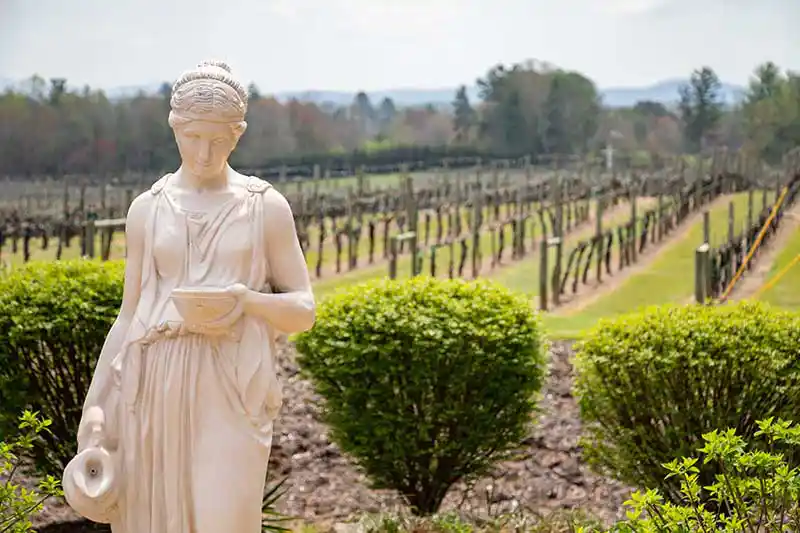
Burntshirt Vineyards – Crest of the Blue Ridge AVA
A family owned vineyard and winery in the heart of Hendersonville apple country and farmland. Burntshirt also has a restaurant onsite that they maintain in addition to the winery and tasting room. They offer mostly dry vinifera style wines with locally grown varietals that include Chardonnay, Gruner Veltliner, Vidal Blanc, Petit Manseng, Traminette, Chambourcin, Cabernet Franc, Merlot, Malbec, Petit Verdot, and Cabernet Sauvignon.
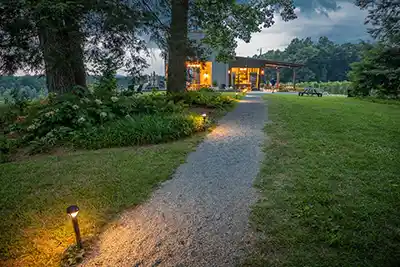
Marked Tree Vineyard – Crest of the Blue Ridge AVA
Another family owned/operated winery and vineyard in Hendersonville, North Carolina. Marked Tree Vineyard has a beautiful tasting room that is located on the continental divide so it has stunning views in most directions. They produce mostly dry wines from vinifera and hybrid grapes that are grown on their estate grounds. Varietals include Gruner Veltliner, Vidal Blanc, Chardonel, Cabernet Franc, Lemberger, Petit Verdot, and Chambourcin.
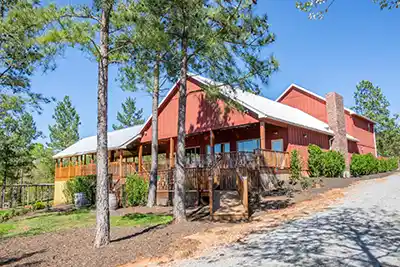
Parker-Binns Vineyard – Tryon Foothills AVA
A family owned/operated winery and vineyard in the Tryon Foothills AVA. Parker-Binns has four generations that are currently working at their beautiful facility that has views of the surrounding foothills. Their mostly dry style of wines include varietals like Chardonnay, Petit Manseng, Muscat, Vidal Blanc, Merlot, Cabernet Franc, Petit Verdot, Chambourcin, Tanat, and Malbec.
Parker-Binns also has a restaurant onsite that is integrated into their tasting room experiences.
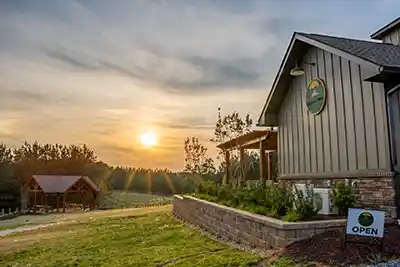
Mountain Brook Vineyards – Tryon Foothills AVA
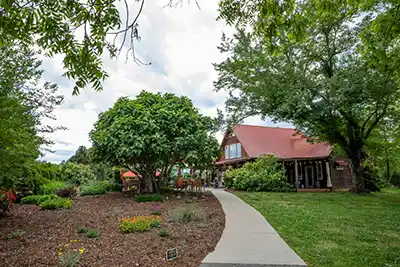
A beautiful family owned/operated winery and vineyard in the heart of the Tryon Foothills AVA. The winery tasting room has stunning views of the surrounding hills and boasts the largest open fire-pit in Western North Carolina. Mountain Brook is currently growing Chardonnay, Pinot Gris, Petit Manseng, Albarino, Merlot, Cabernet Sauvignon, Petit Verdot and Malbec. Their tasting room and outdoor seating area is quite large and can easily handle larger groups. Mountain Brook Vineyards is pet and family friendly.
Overmountain Vineyards – Tryon Foothills AVA
A father/daughter team crafting French style wines from grapes that are grown on their estate. Varietals include Cabernet Sauvignon, Cabernet Franc, Merlot, Petit Verdot and Petit Manseng. Their intimate tasting room overlooks the vineyards and visits can be arranged by reservation only.
Tryon Cellars – Tryon Foothills AVA
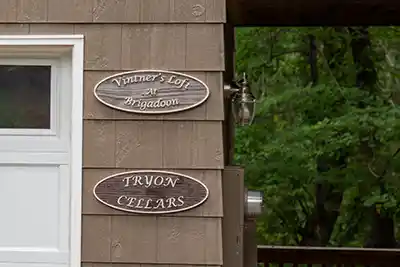
The smallest winery/vineyard in the Tryon Foothills is a family owned/operated endeavor by Bob and Dottie George. They grow Cynthiana (Norton) grapes on their property and make wines from this varietal as well as fruit brought in from other sources. Tryon Cellars can be visited by reservation only.
My Sweet Love
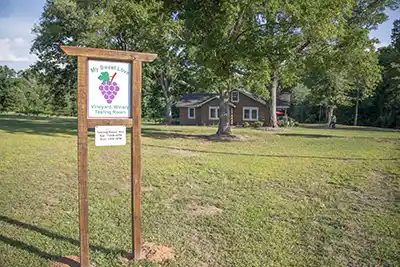
Currently the only winery in Rutherford County and right on the edge of what we would consider “Asheville wineries”. My Sweet Love is a small family owned vineyard and winery that features a combination of both dry and sweet fruit wines. Varietals include Viognier, Petit Manseng, Chardonnay, Cabernet Franc, Merlot and Chambourcin.
Visiting the Asheville Wineries
Hopefully I have made the point that the wine scene in and around Asheville is legitimate. Not only are there a lot of options but there are also some serious options available for even the most demanding wine connoisseur. The question that you would have to ask yourself now is “How do I visit all of these places?“. The obvious and easy answer to this questions is to just go and visit them. You should, however, be aware of a few challenges to consider before you head out on an epic wine tour of the Asheville wineries.
First and probably most important, you will be heading out to taste, drink and enjoy wine. Wine is an alcoholic beverage that will have an impact on your driving skills. Too much can actually create a situation where it is both dangerous and illegal to operate a vehicle on North Carolina public roads (which you will need to traverse in order to get to these places!). This needs to be first and foremost in your mind as you are considering the other challenges I am going to mention.
If your dog’s name is Toto, you could pull off the famous line from the Wizard of Oz – “Toto, I’ve a feeling we’re not in Kansas anymore!“. Asheville is a mountainous region and the roads here can be curvy, narrow and steep. If you are not from this area you might not be used to driving in this type of an environment. Furthermore, if you head out to visit the options outside of Asheville, you will most likely encounter areas with limited cell phone coverage. This can affect your ability to navigate if you are relying on a mapping applications that needs a data connection.
Hiring a transportation company is a great way of dealing with all of the above issues that I mentioned. These too, however, can have some challenges. If you are considering a ride-share options like Uber or Lyft, you shouldn’t have a problem getting from Asheville to any of the options outside of the city but you will likely have a problem getting a ride back. I have lost count of the number of times we have received phone calls from people looking for a ride back after they booked a ride-share vehicle to one of the wineries. Don’t make that mistake! Another issue to consider is that not all transportation companies operate legitimate businesses. North Carolina law is very clear; any vehicle that is not a ride-share that operates commercially, especially 8+ passenger capacity vans, needs to have the proper “For Hire” tags on the vehicle. This is to protect you, the customer, and ensure that the provider is properly insured and conforms to safety regulations. It is unfortunate but there are a number of “transportation” companies in Asheville that do not conform to this legal requirement. This is not an issue for Van in Black as we comply with all state and federal regulations. Not only do we have the proper “For Hire” tags but we also maintain a federal DOT and Motor Carrier (MC) number making it legal for us to cross state lines.
Other things to consider if you are planning a visit to any of the wineries in/around Asheville is that most of them will require reservations if you are a large group (usually 6+ people). Some of the smaller wineries are better for smaller groups and are not very compatible with larger groups of 10+ people. You should try to be mindful of this when you are planning your visits or ask someone, either the wineries themselves or maybe your transportation company, before heading there. Your overall experience will be best if the expectations of your group are matched to the service being provided by the winery.
Elevated Experiences!
Who doesn’t like an elevated experience? Especially if it something that is only available to select groups or if you know to ask for it. A few of the wineries in this area do in fact have elevated experiences that are available. This would include things like meeting the wine maker, a vineyard tour, touring the wine making facilities (which can also include tasting from tanks or barrels) or special dining options. Some of these are available to everyone and are listed on the website of a specific winery. Many of these, however, are only available if you ask or through special relations that have been established. Van in Black, having high-level certified wine experts on our staff, are able to provide elevated experiences that can start before you even enter one of our vehicles. We know wine, we know this area, and we know the players. If you truly want to have an elevated wine experience in Asheville, then Van in Black is the only option for you.
The Best Option for the Best Experience
Regardless of the level of wine experience you want when exploring the Asheville wine scene, Van in Black is the best option for you to have the best day. Don’t stress about driving or any of the challenges I mentioned above; especially the drinking-and-driving part. Don’t worry about what wineries would be best for your group or whether or not you need to make reservations. Book a customized, door-to-door Asheville wine tour with Van in Black to experience this wine region in luxury, safety, and style. Let our expert staff create something amazing for you!
The Epilogue: Diving into the Weeds…
Are you still with me? We are at about 3,500 words into this post which officially makes this one of the longest blog posts I have ever written. It is, however, about wine and I can go on and on with this subject. Since we are talking about North Carolina wines, specifically the wines that are crafted in and around Asheville, I thought it might be fun to dive a little deeper into the challenges and characteristics that make this area unique (viticulturally speaking). I am going to really geek out in this section and get into the weeds so if this isn’t for you, consider the last section the end of this article and go out and explore some wineries. If you are intrigued or want to learn a little more about this region, buckle up and keep reading…
The subject of wine is literally the never-ending rabbit hole. It goes on forever and the more you learn the more you realize this. For example, there are 350-500 named indigenous grape varietals in Italy alone. I could spend a lifetime studying that area alone and never fully know everything there is to know about each varietal. Remember, we are talking just one area! When you factor in the rest of the world and the thousands of things that can have an affect on the flavor of a grape in the vineyard before it even hits the winery; the possibilities are near endless. I remember the first time I learned the number of possibilities there were in shuffling a deck of cards (52 unique items). It is a 68 digit number that might as well be infinity. This literally means that, statistically speaking, there has never been a deck of card shuffled the same since the beginning of time. Think about that! Then think about wine and all of the factors and variables that go into growing the grapes and making the wine. There are thousands (if not millions) of individual factors and all of them will have an effect on the final outcome of a specific wine. It is truly mind blowing! This is what makes wine so fascinating in my opinion. So what does this have to do with the wines in and around Asheville? The answer, my friend, is good news…
Uniqueness Is a Good Thing!
It is a good thing that wine is such a complicated topic. It allows every region where it is grown to achieve a very specific level of uniqueness. This is actually a great thing and it is something that should be celebrated. The wines in this region shouldn’t be trying to be like the wines in Virginia, Napa, France, or any other location. They should find what works best for this area and be unique. The challenge is that this takes time…A long time! Growing grapes and making wine is a very slow process. When you plant a vine, it is 3-5 years before you are going to get grapes that you can use to actually make wine. After that, you get one chance each year to make something, learn from it, and try again the next year. A wine maker will only get 30-40 growing seasons in their lifetime to make the perfect vintage. When growers start to grow grapes in a new region, there are many unknowns that will take years to work out. Things like the right varietals to plant? What type of rootstock should I use? What varietal clone should I use? Yes, it is that complicated. Growers may pick a specific clone of a varietal, say Cabernet Sauvignon, and pair it to a root-stock that is more tolerant of the soil type or weather conditions. Did you know that the majority of vinifera grapes (European plants) that are grown in the world are grafted onto American (non-vinifera) root stocks? This is done to combat a soil louse called phylloxera that nearly wiped out the global grape supply in the late 1800’s. The combination of varietal and root-stock is going to greatly affect the quality and style of grapes that are produced. Add weather, temperature, soil type, sunlight exposure, the slope and aspect of the vineyard, and a number of other factors and you will start to get a sense of everything that can effect the grape before it is harvested and enters the winery to be made into wine. Grape growers in this region will make decisions based on all of these factors when trying to decide what to plant and how to manage it. Many times, especially in newer wine regions, they might have to rip out specific varietals and start over and they learn what grows best. This is why well established wine regions take time to create. They just don’t happen overnight. The wine industry in North Carolina, which includes the Asheville region, has been around long enough now to where growers are starting to dial-in these variables. They know what grows well here and what doesn’t. They know what the challenges are with growing grapes in this region. They know many of the threats that can affect crop yield. They know what makes this area unique and they know how to focus on that. They are no longer trying to be like another region. They are trying to grow North Carolina wines or, in our unique area, they are trying to grow Asheville wines, Crest of the Blue Ridge wines, wines of the Tryon Foothills, etc.
In the next few sections I am going to dive into some of the challenges that growers face in this area and mention some of the varietals that generally work well or don’t work well in the area. I am going to be speaking from a very high level and be somewhat general. You have to remember that every vineyard/winery is unique (and that it is a good thing!). I might mention a varietal that typically has been a challenge to grow here but no doubt there are some people still trying to figure it out. They might have even figured it out for all I know. We are being very general in this section.
Challenges
One of the main challenges faced by grape growers in this region, most of North Carolina actually, is the rainfall and high humidity. If you have spent more than 5 minutes here you will notice that it can be somewhat hot and humid in the summers (you think?) with sudden (and sometimes violent) thunderstorms that pop-up. You might think that the water would be great for growing something but it really isn’t that good for grapes. Believe it or not, it is actually good to put them through a little bit of water stress after veraison comes (when the grapes change color and start the ripen). The rain and humidity increases disease/fungal pressure on the grapes and can actually damage or destroy the grapes making them unusable for wine. In extreme cases, when rainfall is sudden and extreme, the gapes can absorb too much water and it will dilute the sugars inside the grape. In super extreme cases, the grapes can swell and break the skins. Anytime the skin in broken or punctured, the grapes are unusable for wine at that point. This specific challenge, will have a significant effect on the varietals that are selected to grow in this region as thin skinned varietals are much harder to manage.
Another challenge to this region is late spring frosts that occur after bud-break in the vineyard. Grape vines are not very tolerant to frost events once the green parts of the plant have budded out (this is called “bud break” or “bud burst”). A significant frost event can lead to a substantial reduction in yield and has been very problematic in some regions of North Carolina or the higher elevations around Asheville. Vineyard managers will try to mitigate this through varietal and/or clonal selection so that they use late budding varietals. An example of this would include Cabernet Sauvignon but this has other challenges associated with it (see below). Vineyard managers can also plant vines on slopes that will allow the cold air to settle into pockets away from the vines. Specific regions may also offer more frost protection than others. If you recall, the two AVAs in the Asheville region are very different. The Crest of the Blue Ridge is somewhat higher in elevatoin than the Tryon Foothills and would typically be more susceptible to frost events. The Tryon Foothills is also protected by the isothermal weather anomaly that is present in that region. In extreme cases there are also some emergency techniques that can be employed like watering the vines, using large agriculture fans or lighting small fires throughout the vines. Despite all of this, late spring frosts continue to be a challenge for vines in North Carolina.
A final significant threat or challenge to North Carolina farmers are the late summer hurricanes and/or tropical storms that can overpass the region right around harvest. Grape growers would love to see drier weather as harvest approaches as they would prefer to mildly water stress the vines during this time. Many years, however, threats from tropical storms or hurricanes can have a significant effect on the decision of when to harvest. This is primarily based on the reasons mentioned above due to the heavy rainfall. Ideally, you would want to hang the grapes until the desired sugar level (brix) and flavor profile is reached. A storm that is expected to dump 6-8 inches of rain can change that timing of harvest decision and cause a grower to pull fruit before the ideal time. This is going to have an effect on the flavor and quality of the final product that is made from these grapes.
Varietals – The Good and the Bad
For many of the reasons listed above and others that I will discuss in this section, there are certain varietals that tend to do very well in North Carolina and some that do not. Remember, that I am speaking in generalities here. Let’s start with what does not do well…
Difficult to Grow
Pinot Noir doesn’t do well in North Carolina. I wish this wasn’t the case but it unfortunately is. It is a very thin skinned grape with tight bunches that it just very difficult to grow in the humid environment here. There are, however, some people trying it which I think is great. If someone can find a clone or farming method that works, I think a lot of people would welcome that knowledge and plant some Pinot Noir. There is a saying that “Cabernet Sauvignon is the king of wines but Pinot Noir is the wine of kings” and I truly believe that. Speaking of Cabernet Sauvignon…
Cabernet Sauvignon can be problematic. I don’t want to outright say that it doesn’t do well but it has issues. I know, some people are losing their minds right now. It is a beautiful varietal that produces wonderful wines but we have to call a spade a spade. Cabernet Sauvignon is late budding which is good protection against spring frosts but it requires a very long growing season which can be difficult to achieve in North Carolina. It is also at higher risk with the later summer storms as it requires a lot of “hang time” to fully ripen and develop the necessary flavors. So many people are growing this right now in North Carolina and many are doing a fantastic job but I have seen a trend, perhaps it is an anecdotal observation, of growers moving more towards Cabernet Franc which buds earlier and requires less of a growing season. There…I said it!
Any other varietal that is basically thin skinned and/or tightly clustered is going to be a challenge growing in this region. The humidity and high rainfall don’t mix well with varietals with these characteristics.
Easier to Grow
Petit Manseng grows wonderfully in this region. The little bunches of grapes have thick skins that absolutely thrive in North Carolina’s climate. A number of growers in North Carolina are making great wines in both dry and dessert (sweet) styles. Specifically around Asheville, there are a lot of growers that have included this varietal in the line up and they are doing it with great success!
Chambourcin is a French-American hybrid that is very disease resistant and handles the summer heat well. More and more vineyards in North Carolina are adding it to their lineup with some even starting to produce single varietals of Chambourcin (initially it was primarily used as a blending grape).
Cynthiana (Norton) is a native American hybrid grape that does very well is this area and is being picked up by more and more vineyards.
I also have to say that Muscadines grow exceptionally well here as they are our native grape. It is, however, predominately grown in the Piedmont and coastal areas of North Carolina and is rarely grown by anyone in or around the Asheville area. Although, Botanist and Barrel and Perry’s Berry’s creates some wines from Muscadines grapes and I believe Overmountain (Tryon Foothills) has Muscadines on their property and made a dry Muscadine one year. Muscadines and the wines created from them are not for everyone as they have a very distinct flavor profile. But they are, however, a large part of the wine scene in North Carolina when you look at the state as a whole. We do, after all, have the largest muscadine wine producer in the world located in North Carolina. I believe we also has the worlds largest muscadine vine in North Carolina. It is called the “Mother Vine” and it is located in Roanoke Beach, North Carolina.
Wrapping It Up!
I could ramble forever but I need to wrap things up. Perhaps we will have a follow up to this where I dive even deeper into the weeds with the wines of North Carolina. I thoroughly hope that you enjoyed reading this article as much as I enjoyed writing it. There are some additional articles on the blog you should consider reading if you want to dive deeper into some of these topics. I would suggest the following:
What can a mountain teach us about NC wine? – Van in Black (the earlier referenced article)
What is the Best Time of Year for a Wine Tour? – Van in Black
What Is the Best Day To Go to a Winery? – Van in Black
What are the Best Asheville Wineries? – Van in Black
You can also follow the ongoing saga of my wine education adventures. I try to post updates on that from time to time as well.
Until next time…Cheers!
